
"water minerals"
3000 article(s) found

How does the siphon pot make Blue Mountain Coffee?
Make a pot of Blue Mountain Coffee in a classic siphon pot and extract it with your heart. Savor the unique temperament of Blue Mountain Coffee. The brewing method of Blue Mountain Coffee generally uses single coffee utensils. Such as siphon pot, filter bag type, drip filter type and so on. Of course, it can depend on mood and interest. Different ways can change different tastes and feelings.

Hawaiian boutique Kona coffee with a slight sour taste an introduction to the characteristics of the manor area
The quality of the fine Kona coffee is suitable for the right geographical location and climate. Coffee trees grow on the slopes of volcanoes, and their geographical location ensures the altitude needed for coffee to grow; the dark volcanic ash soil provides the necessary minerals for coffee. This is probably due to the fact that Kona Island is rich in volcanic black mud with moderate acidity, rich mineral content and suitable water content. Parallel

What is the effect of different water quality on the flavor of cold-extracted coffee? What kind of water is best for brewing coffee?
A pot of freshly brewed black coffee consists of a small amount of flavor substances and most of the water. In order to make the coffee taste good, in addition to the water temperature, water quality also plays a vital role. Experienced partners should know that the composition of drinking water varies with the brand of drinking water, and the softness, hardness and acidity are different.
Detailed Analysis of the components of Fine Coffee
★ moisture: the water content of coffee beans varies greatly with different processing stages and products. The moisture content of wet coffee beans with film is about 50%, while that of dried raw coffee beans is about 10%-13%, and that of roasted coffee beans is only less than 5%. The existence of water in coffee beans is the same as other kinds of food and beverages, because it contains a considerable amount of hydration colloid macromolecules.
Detailed Analysis of the components of Fine Coffee Bean
★ moisture: the water content of coffee beans varies greatly with different processing stages and products. The moisture content of wet coffee beans with film is about 50%, while that of dried raw coffee beans is about 10%-13%, and that of roasted coffee beans is only less than 5%. The existence of water in coffee beans is the same as other kinds of food and beverages, because it contains a considerable amount of hydration colloid macromolecules.

How to make a delicious coffee coffee grinder how to debug
Boiling in the right amount of water can add to the taste of a cup of coffee, and the proportion of water is more than 98%. Therefore, the water has a great effect on the taste of coffee. The most suitable water for brewing coffee is water with hardness (in units of total dissolved solids) between 125and 175ppm, pH between 6.5and 7.5.It does not contain chlorine, potassium, sulfur and other compounds. General household RO water dispenser

What kind of water should be used to make coffee?
Where there is water, there is life. From human beings to plants, water is the source of life for all things. Water molecules are composed of oxygen ions and hydrogen ions. It is precisely because of this molecular structure that it is difficult to find pure water in the natural environment. In the process of changing from Rain Water to tap water, water will absorb and decompose many kinds of substances that come into contact with it. therefore, we must pay special attention to the purification and purification of water.
Official training basic knowledge tongue taste area distribution map sweet, salty, sour, bitter professional coffee
Taste refers to the ability to sense the taste of substances, including the taste of food, certain minerals and toxic substances, which is a near sense compared with the sense of smell, which is also chemically induced. Western experts traditionally use taste maps, coffee and red wine tastings. Taste refers to the ability to feel the taste of substances, including food, certain minerals, and

Introduction to the flavor and taste characteristics of Tanzania boutique coffee bean Kilimanjaro coffee
Tanzania is rich in mineral resources. By 2014, the major minerals identified include gold, diamond, iron, nickel, phosphate, coal and various gemstones, ranking fifth in Africa in total. Tanzania also has huge natural gas reserves. According to official data released by Tanzania, Tanzania has proven natural gas reserves of 44 trillion cubic feet, and the total reserves are expected to be at least

How to make Blue Mountain Coffee the steps of boiling Blue Mountain in a siphon pot
Brew a pot of Blue Mountain Coffee in a classic siphon pot.

How to make Blue Mountain Coffee the steps of boiling Blue Mountain in a siphon pot
Brew a pot of Blue Mountain Coffee in a classic siphon pot.
Knowledge of high-quality coffee beans detailed analysis of the components of coffee beans
★ moisture: the water content of coffee beans varies greatly with different processing stages and products. The moisture content of wet coffee beans with film is about 50%, while that of dried raw coffee beans is about 10%-13%, and that of roasted coffee beans is only less than 5%. The existence of water in coffee beans is the same as other kinds of food and beverages, because it contains a considerable amount of hydration colloid macromolecules.

Manor Renas Manor in El Salvador, variety of beans, brand recommendation and manor introduction
Professional barista exchanges please pay attention to the coffee workshop (Wechat official account cafe_style) El Salvador Renas Manor single bean species, brand recommendation and manor introduction active volcanic activity brings the country rich in mineral volcanic ash, mainly volcanic ash in the soil, more minerals, less organic matter, therefore, in order to maintain the location and make up for the lack of organic matter

Blue Mountain Coffee beans knowledge how to make Blue Mountain Coffee? Production method of Blue Mountain Coffee
Brew a pot of Blue Mountain Coffee in a classic siphon pot.
El Salvador Hot Spring Coffee El Salvador Onsen Coffee
El Salvador, with its upland topography, is the smallest country in Central America, flanked by Guatemala and Honduras. Because there are two parallel mountains in the country, the volcanic soil is rich in minerals, and this special geographical environment makes Salva El Salvador a highland topography, the smallest country in Central America, flanked by Guatemala and Honduras.

Detailed analysis of the ingredients of coffee beans what are the ingredients in a coffee bean?
★ moisture: the water content of coffee beans varies greatly with different processing stages and products. The moisture content of wet coffee beans with film is about 50%, while that of dried raw coffee beans is about 10%-13%, and that of roasted coffee beans is only less than 5%. The existence of water in coffee beans is the same as other kinds of food and beverages, because it contains a considerable amount of hydration colloid macromolecules.
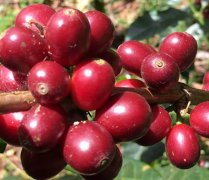
Composition analysis of coffee beans, details of food safety label
Professional barista communication please follow the coffee workshop (Wechat official account cafe_style) raw beans (unit: percentage) moisture: 11.3 fat: 11.7protein: 11.8sugar: 8.0essence: 17.1 caffeine: 1.3tannic acid: 6.0mineral: 4.2crude fiber: 28.6cooked bean moisture: 2.5fat: 13.2protein: 12.8sugar: 1.8essence

Fragrant coffee farm in Tanzania introduces Arusha coffee in the fire area of Mount Jilimaro.
Northern coffees tend to be pleasant in aroma, rich in acidity and body, sweet taste with balanced flavours due to mineral nutrients from volcanic soils. The northern coffee is full of aroma, bright acidity, mellow taste, and thanks to the rich volcanic soil, it is as sweet as mineral water.

Water is definitely an important factor in determining the final quality of coffee.
Maxwell Colonna-Dashwood, winner of two British barista competitions in 2014 and 2015, explains how water quality affects coffee quality. At the beginning of the lecture, Corona Dashwood prepared three coffee samples A, B and C for the audience. The audience was invited to taste three cups of coffee and record the differences in taste. Coffee

A brief introduction to the flavor and aroma characteristics of Cuban crystal mountain boutique coffee beans with coarse mineral fruit flavor.
In 1748, coffee was introduced into Cuba from Domiga, and Cuba began to grow coffee ever since. With fertile land, humid climate and abundant Rain Water, Cuba can be called a natural treasure land for coffee cultivation. The suitable natural conditions provide a favorable natural environment for the growth of coffee trees, and coffee is well planted and developed here. In Cuba, the cultivation of coffee is regulated by the state. Cuba is the best